
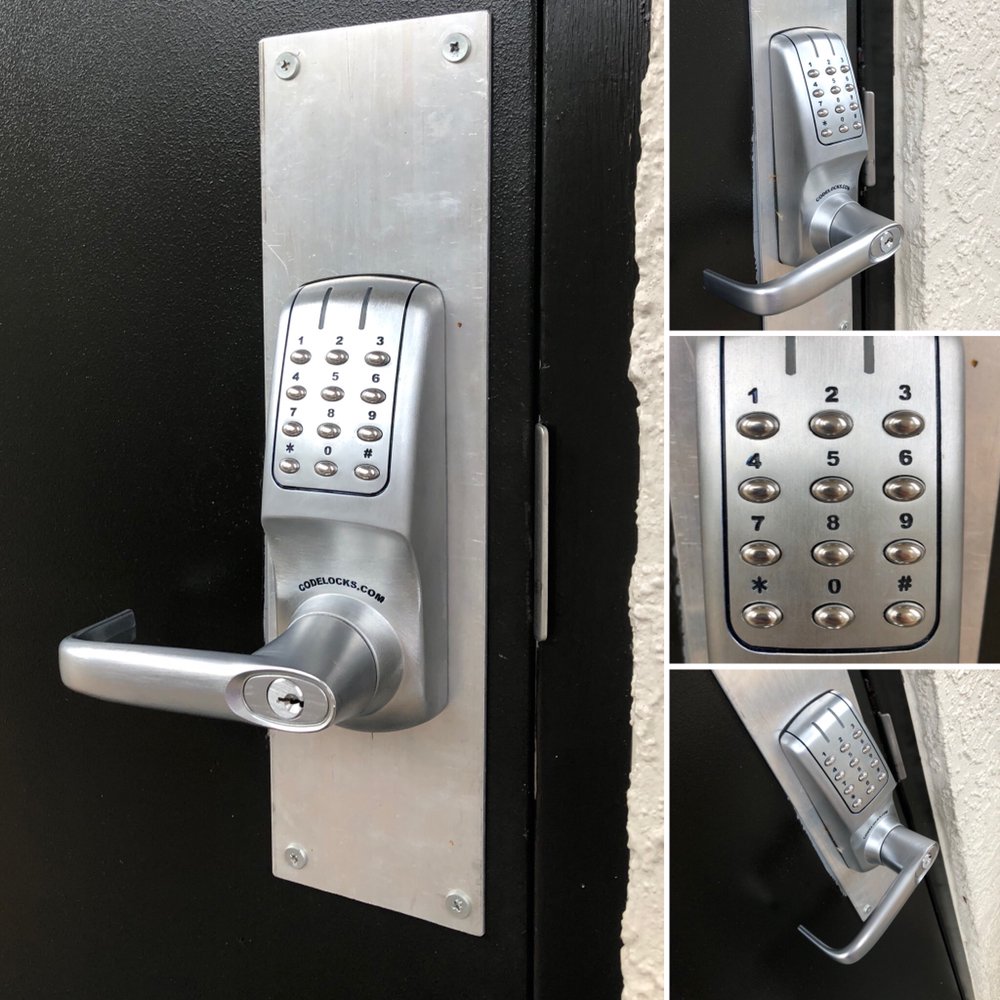
As a business grows, key rings get messy. Managers collect copies for every suite, employees keep keys after role changes, and nobody is sure which door still uses the original hardware from opening day. A commercial master key system replaces that chaos with a planned hierarchy of access.
A Good Locksmith has designed and serviced master key systems for offices, retail spaces, HOAs, and property managers across Southwest Florida since 1994. If your building needs clearer control, our master key systems and commercial locksmith services can organize access without issuing a giant ring of unrelated keys.
Think of master keying as access architecture. Instead of reacting every time someone needs a new door opened, you design levels that match roles. The result is fewer emergency key copies, cleaner offboarding, and faster facilities response when something breaks after hours.
What a Master Key System Really Is
In a master key system, each lock is pinned so it accepts more than one key type. An employee key may open only one office. A department key may open several related rooms. A master key opens every lock in the designed system.
That structure lets owners grant the least access necessary. A storage closet key does not need to open payroll. A cleaning key can cover common areas without opening cash offices or medication rooms.
Done correctly, the system is documented. You know which key levels exist, who received them, and how to change one door without dismantling the whole building plan.
Master keying is not the same as giving everyone the same key. Sameness is the problem most growing businesses already have. Hierarchy is the solution: each person receives only the openings required for their work.
Common Levels Businesses Use
Not every property needs a complex hierarchy. Many small businesses thrive with change keys for individuals and one master for ownership or facilities leadership. Larger properties may add grand masters across multiple buildings or floors.
- Change key: opens one lock or a small assigned set
- Maison or common-entry key: opens shared entry while suites stay separate
- Master key: opens all locks within one system group
- Grand master: opens multiple related master groups when needed
Property managers often combine these ideas with turnover rekeying. See Rental Property Locksmith Checklist for Landlords for unit-level habits that pair well with building masters.
Retail centers and professional plazas sometimes need common-area access for janitorial teams while keeping tenant suites isolated. That is a classic master-key use case and one we implement often for Southwest Florida property managers.
Benefits Beyond Convenience
Convenience is obvious: fewer keys on the manager's ring. The deeper benefit is accountability. When access levels match job roles, you reduce casual over-access and simplify offboarding.
Master systems also speed emergency response. A facilities lead can reach mechanical rooms, offices, and storage without hunting through unlabeled copies. That matters during water leaks, after-hours alarms, or security incidents.
For retailers in Naples or medical offices in Estero, organized keying is part of professional operations, not a luxury upgrade.
Good documentation should include a keying chart, issue log, and hardware notes. Without paperwork, the system decays into tribal knowledge the first time a manager leaves.
Design Mistakes to Avoid
The most common mistake is improvising. Businesses add locks over the years, ask different vendors to match keys, and eventually create a tangle that nobody can document. Another mistake is handing out master keys too freely. A master key is a high-trust tool, not a convenience souvenir.
Overly deep hierarchies can also become hard to maintain. Start with the access you need today and the growth you reasonably expect, not an elaborate chart nobody will update.
If employee turnover is high, plan for rekey intervals and restricted keyways that discourage uncontrolled duplication. Our commercial team can explain where restricted keys make financial sense and where standard systems are enough.
Avoid stamping keys with door names or unit numbers whenever possible. Labels that explain exactly what a lost key opens make accidental loss more dangerous. Use coded identifiers tied to your internal log instead.
When to Expand, Rekey, or Replace the System
Expand the system when you remodel, add suites, or create new secure rooms. Rekey when masters are lost, managers leave under difficult circumstances, or you inherit a building with unknown key distribution. Replace hardware when locks are worn, nonstandard, or incompatible with a clean master chart.
After a break-in or suspected key misuse, do not guess. Secure the affected openings first with emergency locksmith help, then redesign access intentionally. The recovery mindset in What to Do After a Break-In applies to commercial spaces too.
Businesses across Fort Myers, Cape Coral, and Bonita Springs often discover that one well-planned master system costs less over time than endless emergency key copies.
If your building is moving toward electronic access on some doors and mechanical keys on others, plan the hybrid deliberately. Mixed systems work, but only when staff know which openings are keyed, which are credential-based, and who administers each side.
What to Prepare Before a Master Key Consultation
Walk the property with a simple door list: exterior entries, offices, stockrooms, shared amenities, and mechanical spaces. Note who needs daily access versus occasional access. That spreadsheet becomes the foundation of the keying chart.
Also gather any existing keys and label them as best you can. Even a messy collection helps the locksmith see what hardware is already on site. From there, A Good Locksmith can propose a clean structure, pin the cylinders, cut keys, and leave you with documentation your team can maintain.
If your property mix includes both commercial suites and residential rentals, ask about coordinating standards so maintenance staff are not juggling unrelated systems every week.
Bring decision makers to the first consultation: ownership, facilities, and office management often have different access assumptions. Aligning those expectations early prevents pinning a system that nobody actually wants to live with. Businesses in San Carlos Park and Estero can schedule on-site surveys through A Good Locksmith.
After installation, schedule a short staff handoff. Show managers which keys exist, how to request changes, and what to do if a master is lost. A system that only the locksmith understands will drift the first time someone cuts an informal duplicate. Training is part of the install, not an optional extra.
If your company operates across multiple Southwest Florida locations, ask whether separate masters with a carefully limited grand master are safer than one key that opens everything everywhere. Breadth of access should expand only when operational need is real.